Mocha Mousse to Cloud Dancer — what the warm-nude palette is, why it works in small UK flats, and how to build it room by room.
You’ve seen it on Pinterest. You’ve seen it on Instagram. The cream sofa, the oak side table, the linen curtains, the brass lamp. Magazines call it “warm minimalism,” “quiet luxury,” or — when they’re being lazy — “cottagecore-meets-Scandi.” We call it the warm nude home aesthetic, and in 2026 it has quietly become the default for UK women buying their first home.
This is a guide to what it actually is, why it ages well, and how to build it whether you’ve just signed a London flat lease or completed on a 1930s terrace in Manchester.
TL;DR
- The palette is warm-toned (cream, beige, mocha, oak, brass) — not cool greys, not bright whites
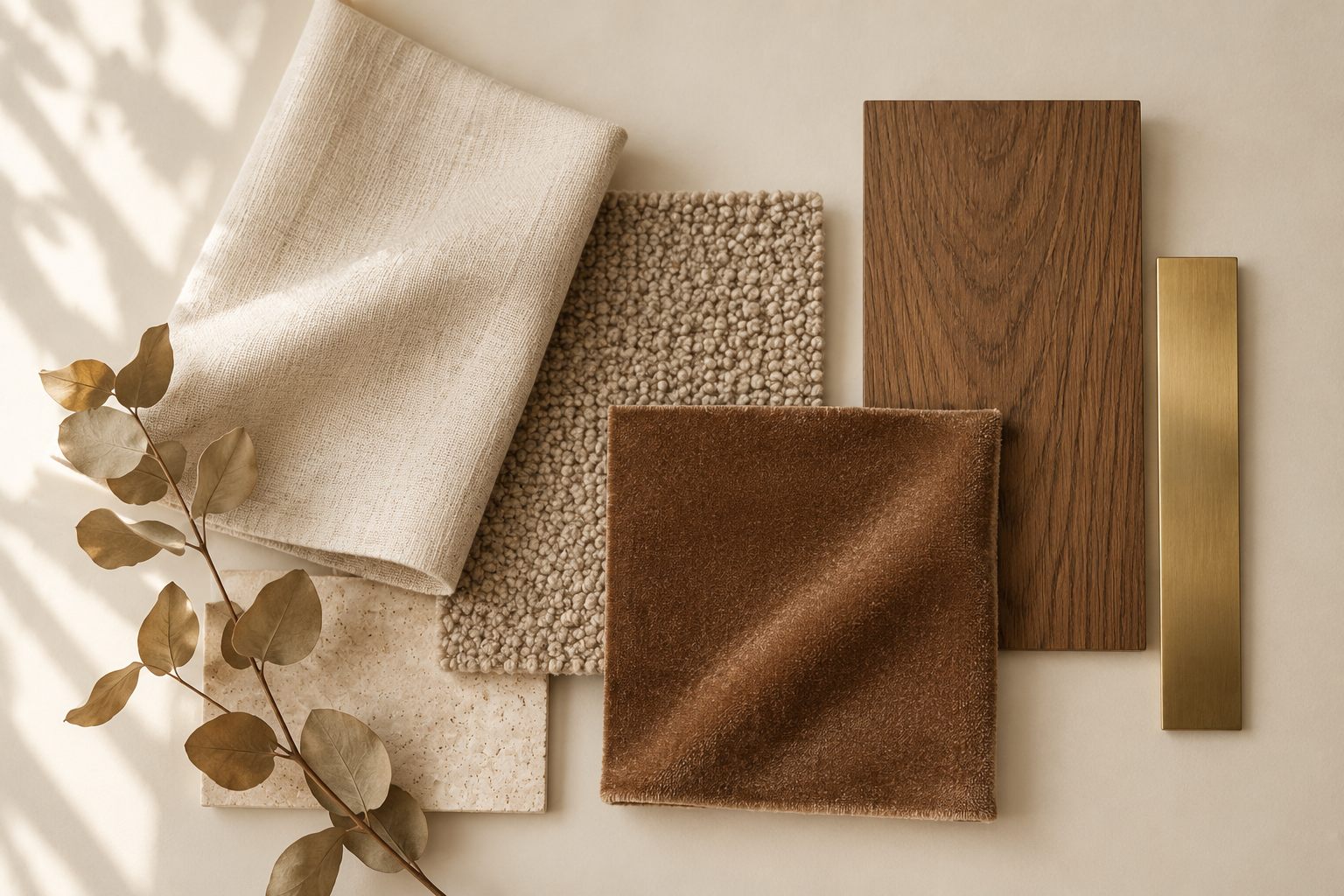
- The materials are natural-feeling — linen, wool, oak, ceramic, brass
- It works particularly well in small UK rooms because warm tones make small spaces feel intimate, not cramped
- It’s an evolution of cottagecore + quiet luxury, with the Pantone 2025 Mocha Mousse driving the brown-toned shift
- Build it in this order: paint/walls → rug → sofa → lamps → textiles → accessories
What the warm nude aesthetic actually is
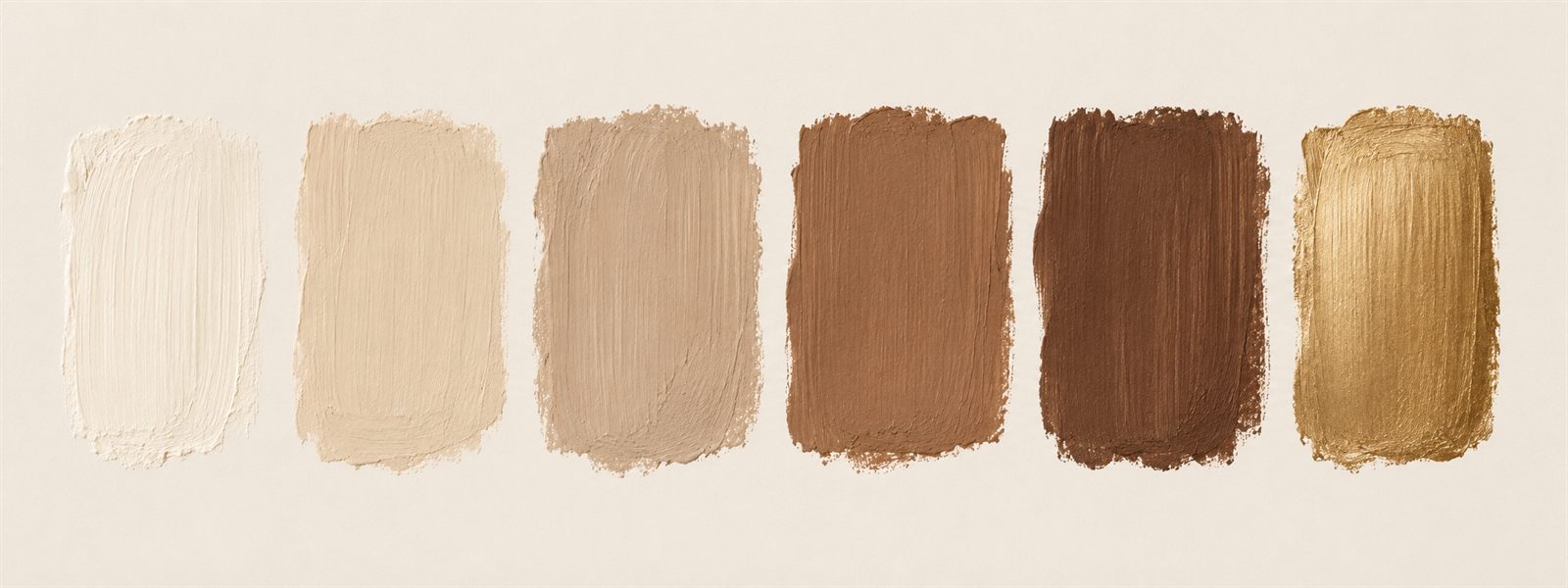
It’s a colour story before it’s anything else. The whole look is built on six base tones:
- Cream — the lightest, softer than pure white. Walls, large surfaces.
- Soft beige — slightly warmer than cream. Card backgrounds, curtains.
- Warm taupe — the workhorse mid-tone. Rugs, throws, larger upholstery.
- Mocha brown — the accent. Buttons, link colours, statement furniture.
- Oak wood — the structure. Furniture legs, frames, side tables, floors.
- Brass — the highlight. Lamps, hardware, candlesticks, mirror frames.
Avoid: cool greys, bright whites, electric blues, primary colours, anything labelled “millennial pink.” These cool tones will fight every other piece in the room.
Why it’s having a moment
Three things converged in 2024-25:
- Pantone Mocha Mousse (2025) declared brown the new neutral. Every home brand pivoted production. By 2026 the warm-nude palette is on every high-street home buy.
- Quiet luxury as a movement (originally menswear/womenswear) bled into interiors. Think materials over branding, slow purchases over fast.
- Beige fatigue from 2018-2021 finally lifted. The cool grey/cool beige of the late 2010s — the “open-plan kitchen Instagram” look — felt tired. Warm browns and creams replaced them.
Pantone’s 2026 Cloud Dancer (a soft warm white) signals where the palette moves next: slightly less brown, slightly more cream. The warm-nude lane broadens, doesn’t disappear.
Why it works in UK rooms specifically
UK flats and terraces share two problems:
- Small rooms — average UK living room is ~17m², compared to ~24m² in the US.
- Limited natural light — north-facing rooms, single-aspect flats, tall Victorian rooms with one window.
Warm tones solve both. Cool greys make small rooms feel like waiting rooms. Warm tones make small rooms feel like cosy rooms. There’s a real neuroscience reason — warm tones are processed as “near,” cool tones as “far,” so a warm-painted small room reads as cosy-intimate rather than small-cramped.
Building the aesthetic by room
Living room
Build order:
- Paint (if you can): Farrow & Ball Slipper Satin or Joa’s White on walls. Renters: skip this — magnolia is fine, you build over it.
- Rug: a warm-taupe wool or bouclé. See our Cosy Living Room Ideas post for specific picks.
- Sofa: linen-blend in oat, cream, or warm taupe. New isn’t necessary — Vinterior or Made.com sale.
- Lamps: 3 minimum, all 2700K bulbs.
- Textiles: cushions and throws — see our warm beige cushions roundup.
- Wood pieces: oak side table, oak coffee table, oak picture frames.
Bedroom
Build order:
- Bedding: warm-cream linen (not white-white, not grey). Piglet in Bed is the gold standard if you can stretch (~£140 for a duvet cover). Otherwise Soak & Sleep.
- Headboard or upholstered alternative: tan velvet or biscuit linen.
- Bedside lamps: pair, brass-base.
- Throw at the foot of the bed: chunky knit in cream or oat.
- Curtains: cream or oat linen — never blackout in white. Skip the prints.
Kitchen
You can’t change a rented kitchen, but you can soften it:
- Replace plastic accessories with ceramic: utensil crock, salt cellar, spoon rests.
- Tea towels in beige + cream linen — replace synthetic ones.
- An oak chopping board on display — Cox & Cox or Etsy.
- A bowl of fruit on the counter (lemons in winter, apricots in summer) — actual produce as decor.
- A small framed print above the kettle. Usually one is enough.
Bathroom
- Towels: oat or putty waffle weave from The White Company or Soak & Sleep. Replace any white or grey towels.
- Bath mat: bouclé or wool, warm taupe.
- Soap dispenser + toothbrush holder: ceramic, off-white. Skip the plastic dispenser the previous tenant left.
- One large mirror with a wood or brass frame.
- Reed diffuser: warm vanilla or fig.
Reading nook
We’ve written this one in full — How to Style a Reading Nook in a Small UK Apartment Under £200.
The materials list
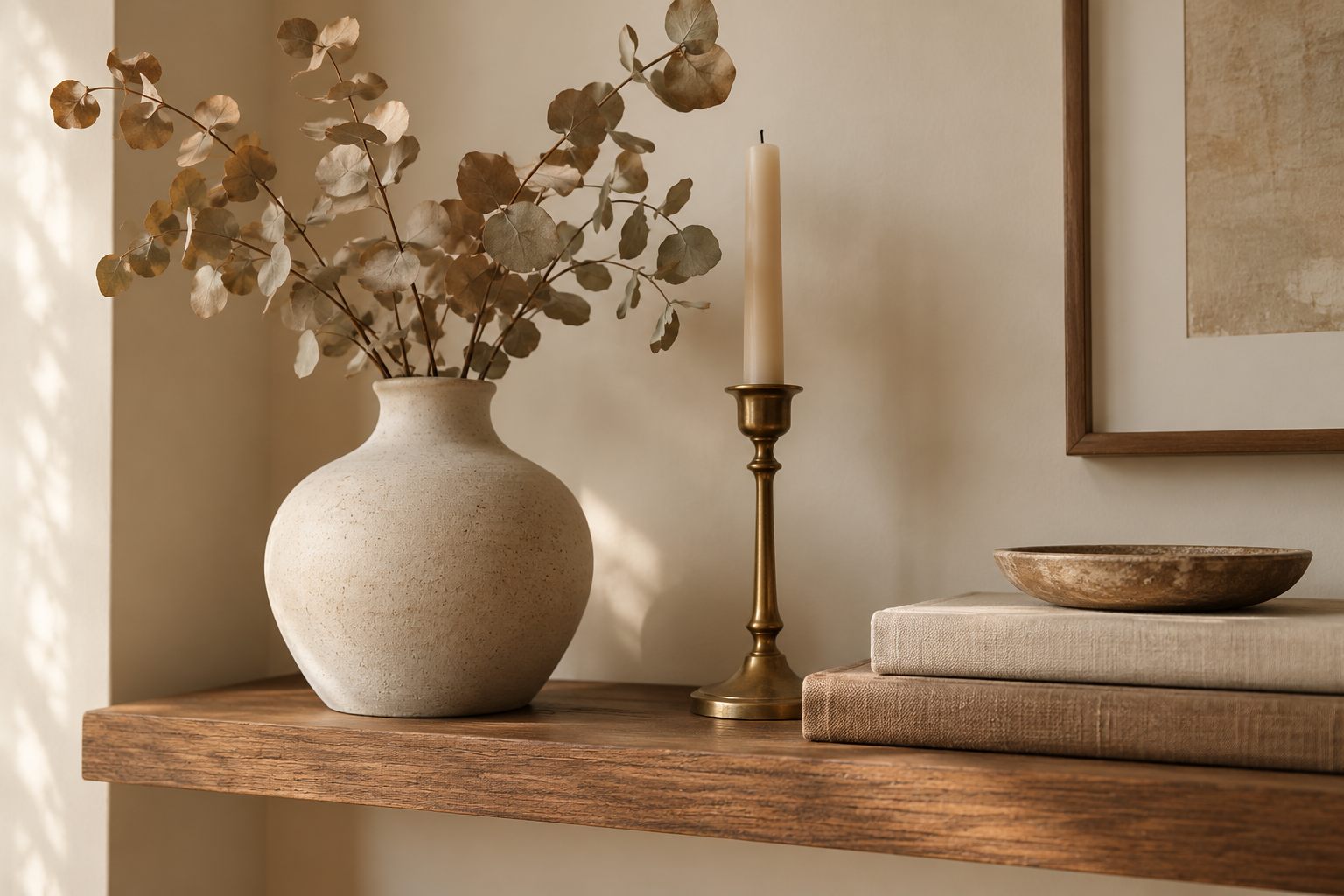
If a piece isn’t one of these, question whether it belongs:
- Linen (curtains, bedding, cushion covers)
- Wool (throws, rugs, cushion mixes)
- Oak (furniture, frames, structural pieces)
- Brass (lamps, hardware, candlesticks)
- Ceramic (vases, mugs, bathroom accessories)
- Bouclé / boucle (one statement piece per room maximum)
- Faux-fur (one throw, autumn/winter only)
- Rattan / cane (used sparingly — too much reads 2018)
What to actively avoid in materials:
- Glass and chrome combinations (too 1990s)
- High-gloss lacquer (fights the matte warm-nude story)
- Synthetic velvet under £20 (pills within weeks)
- Polished brass that’s actually plastic (it’ll oxidise weirdly)
How much it actually costs
A full warm-nude living room build, from scratch:
- Budget version: ~£600-800 (Dunelm + IKEA + a few Etsy finds)
- Mid-range: ~£1,400-1,800 (Cox & Cox + The White Company sale + Habitat)
- Investment: £3,000+ (Soho Home + Liberty + bespoke pieces)
You don’t need the investment version. The £600-800 version, well-curated, is genuinely indistinguishable from the £1,800 version in photos — and that’s what your sofa actually needs to do, since the only people seeing it are you, your partner, and Pinterest.
What ages out of the trend
We’re tracking these specifically:
- Pure beige walls — beige fatigue is predicted for late 2026/2027. Cream and warm white are the safer paint choices long-term.
- Mocha-mocha-mocha rooms — too brown reads dated faster than balanced warm-nude. Layer cream, oat, and brass to balance the brown.
- Excessive bouclé — by 2027 the loop weave will read as a 2024-25 trend. One piece per room ages well; everything-bouclé does not.
What ages well
- Linen — has aged well for 200 years. Will continue to.
- Oak furniture — same.
- Brass hardware — gets better with patina.
- Cream paint — neutral that survives every trend cycle.
Closing thought
The warm nude home aesthetic isn’t a trend in the disposable sense — it’s a long-tail neutral with a particular flavour. The brown notes are the 2025-2026 part. The cream-oak-linen-brass core has aged well for decades and will keep doing so.
Build it slowly. The single best piece you can buy is the one you’ve saved for, not the one Dunelm dropped a sale on this week.
For the practical room-by-room next steps, start with the Cosy Living Room Ideas for UK Rented Flats. For seasonal updates, the Cosy November Reset is our most-used piece.
More from Hearth & Hush: Cosy Living Room Ideas for UK Rented Flats · 15 Warm Beige Cushions Under £40 · How to Style a Reading Nook Under £200 · Cosy November at Home: A 12-Step Reset for the Dark Evenings